Best applications
Load cell repair, force transducer development, test rigs, stress analysis and specialised measurement projects.
Strain gauge components for force measurement, load cell repair and specialist weighing technology applications.

Fully encapsulated Constantan foil strain gauges with thin polyimide film backing. Offers both Self-Temperature (or elastic modulus) and creep compensation simultaneously. Has a high elongation rate and excellent heat resistance on a wide temperature range and low hydroscopicity.
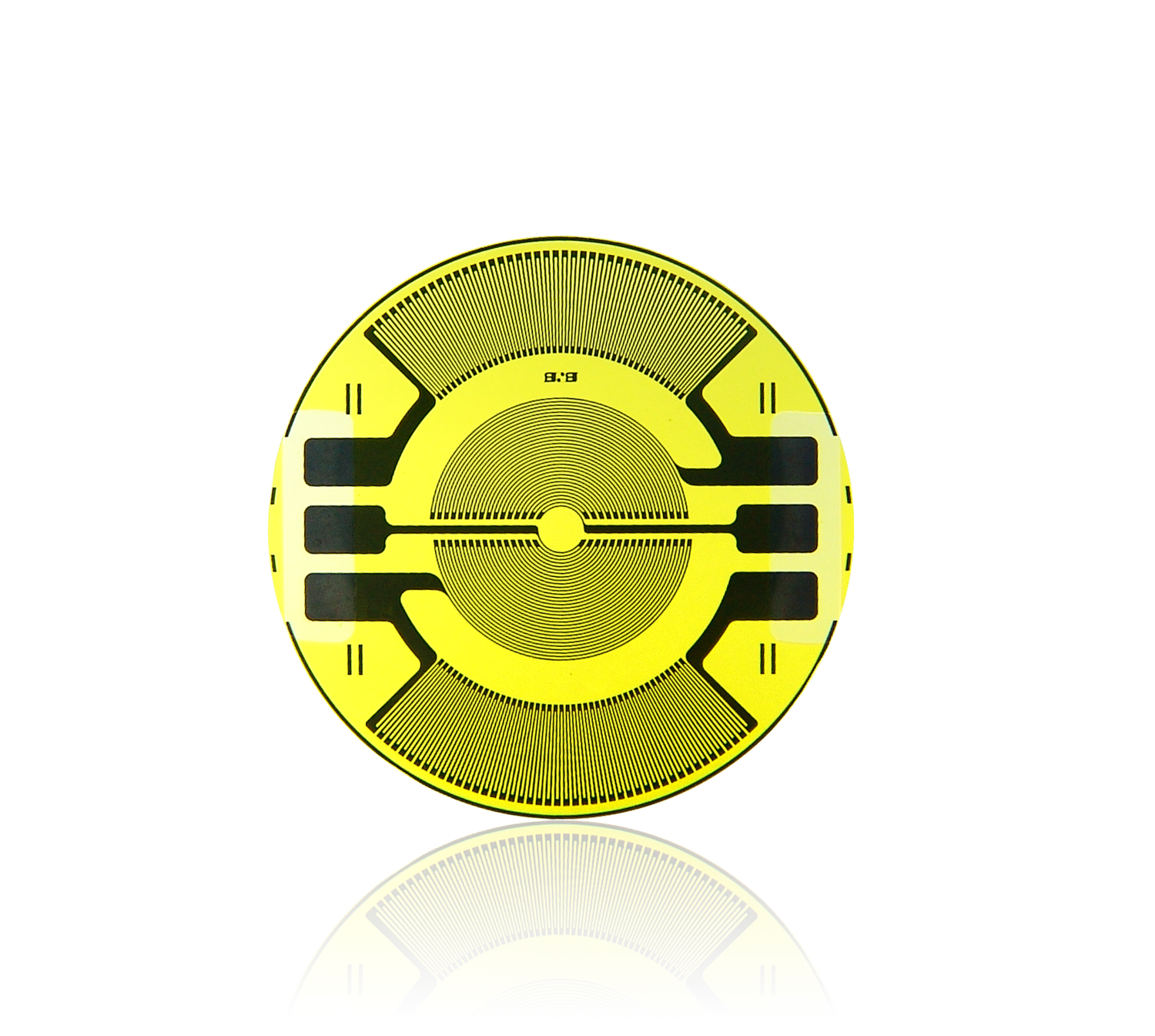
Fully encapsulated Constantan foil strain gauges with thin polyimide film backing. Offers both Self-Temperature (or elastic modulus) and creep compensation simultaneously. Has a high elongation rate and excellent heat resistance on a wide temperature range and low hydroscopicity.
Strain gauges are used in force measurement, load cell production, repair work and test applications where bonded sensing elements are required.
Load cell repair, force transducer development, test rigs, stress analysis and specialised measurement projects.
Match gauge resistance, pattern, backing, gauge length, temperature range and adhesive system to the material and application.
Keep gauges clean and dry, avoid touching the grid, prepare the surface carefully and protect the finished installation.
A damaged load cell should be assessed for mechanical deformation before replacing gauges, as overloaded metalwork cannot always be restored.
Use stable excitation, a suitable bridge circuit and careful wiring practices to reduce noise and drift.
Send the application, material, dimensions and target measurement range if the gauge pattern is not obvious.
No. The gauge type, resistance, pattern and bonding process must suit the original load cell design.
Most precision repairs need controlled workshop conditions, correct adhesives and proper sealing.